One of horror history’s most recognizable icons is given the star treatment in a brand new 6.5 hour (!) documentary,
Crystal Lake Memories: The Complete History of Friday the 13th (based on the bestselling book by Peter M. Bracke). Writer/director Daniel Farrands and producer Thommy Hutson, who previously teamed up for 2010’s award-winning
Never Sleep Again: The Elm Street Legacy, have assembled interviews on their four-disc Blu-ray/DVD combo pack (two of each) with approximately 150 cast and crew members from all twelve
Friday the 13th films. (When purchased through the
Crystal Lake Memories site, buyers will also receive a bonus DVD with nearly 4 hours of extended interview material.)
Corey Feldman (the original Tommy Jarvis) narrates
Crystal Lake Memories, with a virtual who’s who of interview subjects including Kane Hodder, Robert Englund, Tom Savini, Danielle Panabaker, Sean S. Cunningham, Derek Mears, Betsy Palmer, Wes Craven, Robert Shaye, Alice Cooper and many more. The film will be officially released this Friday, September 13, 2013 via 1428 Films with a list price of $29.95
In the 33 years since the original
Friday the 13th premiered in May of 1980, the slasher franchise has grown to include twelve feature films, a television series, novels, comic books, merchandise and memorabilia. In addition to staggering box office success, the films turned Jason Voorhees and his signature hockey mask into a pop culture icon. Now fans can get an in-depth look that spans the entire history from those involved.
Farrands and Hutson were kind enough to take a few minutes out from their breakneck schedule of applying the final touches to such a mammoth undertaking to chat with
HorrorHound about everyone’s favorite tall, dark and gruesome boogeyman.
HorrorHound: What are your feelings now about your previous
F13 documentary,
His Name Was Jason (2009)?
Thommy Hutson: What is interesting about
His Name Was Jason was its emphasis less on the making-of the Friday films as a franchise and more on the character of Jason. Although the crafting of the films as a whole was touched on in some way, the exploration of Jason Voorhees as a villain, and how and why he came to be so popular was interesting and, honestly, necessary since the show was mandated to a 90-minute running time. While we had fun making it, the parameters we were given left little room to truly dig deep like Peter Bracken's book did. With
Crystal Lake Memories, we are able to finally do what we feel will tell the best, most in-depth story of the films and TV series and what went into creating them.
Daniel Farrands: Until Thommy and Andrew Kasch and I teamed up again a year later on
Never Sleep Again, we honestly didn't know if a four-hour documentary would work, much less find an audience. Fortunately, it managed to do both. Now we've taken that same approach on
Crystal Lake Memories by focusing on the making of every film in the franchise in chronological order. Given that this show pushes the seven-hour mark, I think it's safe to say that Jason has at last been given his due.
HH: Having presumably spent so much time researching the series, do you each still have a favorite F13 film?
DF: For me it's a toss-up between
Parts 2,
3 &
TFC. I felt Steve Miner brought some real polish – and genuine scares – to the second film. He carried over the sense of fear and isolation that Sean Cunningham established so well in the original and glossed it up a bit with his use of the Steadicam.
Part 2 also introduced the strongest and, in my opinion, most intelligent and resourceful of all the final girls with Ginny Field (Amy Steel). I have a soft spot for
Part 3 as well simply because of the cheesy-yet-effective 3D effects and of course the introduction of the hockey mask (compliments of my real-life friend and entertainment attorney Larry Zerner, who played Shelly in the film). Lastly,
The Final Chapter was the perfect summation of the series and felt like a much bigger movie in terms of its scope and set pieces (hovering helicopters with searchlights, a kid named Tommy Jarvis who succeeds where all the adults have failed by doing in Jason ginsu-style?!). I feel the first four make up a solid "quadrilogy" of early ’80s slasher films and really set the stage for the rest of the series (with all its varied hits and misses).
TH: I would be doing a huge disservice to Sean Cunningham, the cast and crew of the original to not mention the first film as I feel it goes without saying the original in any franchise needs to be at the top of the list (otherwise, why are we watching the sequels!?). That said, I would probably say one of my favorites (sorry, I can't pick just one!) is
Part 2: it's scary, fun and really is a great continuation of the original film and story (and, let's be honest, killing Alice off at the beginning – whether we agree with it or not – was shocking and unexpected). It also has a fantastic, strong and incredibly memorable heroine in Amy Steel's "Ginny." And baghead Jason will always be creepy to me. It's just a great sequel. Dan would be shocked if I didn't cop to my other favorite: Part 7. I just love the “Carrie vs. Jason” aspect (give me telekinesis against a villain any day), love the look of Jason, think Kane nailed the character and I find the movie so incredibly fun. If it is on, I am
absolutely watching it.
HH: How much time do you spend on the
F13 TV series, considering it doesn't really deal with the Jason Voorhees mythos? Did you like the show?
TH: While we admittedly don't spend as much time on the series as the films in the franchise, we definitely do take a nice look at how the series came to be, it's evolution and, ultimately, its cancellation. As a matter of fact, as Dan can attest, it's ending is almost (if not moreso) as fascinating as its beginning, having to deal far more with a group of people having the power to make decisions about what everyone should be allowed to watch than whether or not it was a ratings success; in fact, it performed well enough that it most likely would have stayed on the air.
DF: For me it was important to acknowledge it as part of the evolution of the franchise and how it came at the height of the Reagan era when the
Friday films were being singled out – and ultimately butchered – by the MPAA. Ultimately, the TV show was targeted by a fundamentalist preacher and his followers, who astoundingly held enough influence to get the show pulled off the air even as it continued to perform strongly in the ratings. To me, the most interesting part of the television series isn't the individual episodes or the fact that it had nothing in common with the films other than the title and producer Frank Mancuso, Jr. Personally, I was more taken in by the underlying story of censorship and the danger of allowing a single group's definition of morality to impinge on anyone else's right to freedom of speech and expression. That, to me, is more frightening than any horror film.
TH: All that said, I am definitely a fan of the series. I found its concept interesting and a fun, thrilling week-to-week adventure. I always recall, though, not being able to find the show when it first ran since it was on so late at night in many markets. I didn’t even know I was even watching the pilot episode because it had nothing to do with Jason – I almost turned it off! Thankfully I was intrigued enough to keep watching. Ultimately, I wasn't disappointed. And it was a concept that clearly worked – take a look at
Warehouse 13!
HH: Why do you think Jason resonates so strongly with the horror crowd?
DF: Jason, alongside Freddy Krueger, Michael Myers and maybe even Chucky, has been a modern-day myth and an iconic bogeyman for two – going on three – generations. He's been called everything from a mongoloid mama's boy to an unstoppable force of nature. Behind that hockey mask is a character that we not only fear but in some ways understand. Jason, we can only infer from the random snippets of backstory we've gotten, was the underdog, the kid who was different, bullied, neglected and ultimately forgotten. First it was his mother who wouldn't let people forget. Then it was Jason himself. I think Ginny summed it up best in
Part 2 when she said that Jason was "crying out for a return, for resurrection." (Little did she or anyone else know just how many resurrections that would entail!)
TH: Jason is that ghost story around a campfire that we all love to hear and be afraid of, but at the same time he's a character in some ways that can be feared as much as pitied. The recollection of his death in the first film is actually quite sad if looked at from a real world context. From there, Jason grew into a vengeful person who lived (and then died) to punish those who he perceived wronged him. There's almost a moral compass (albeit a twisted one!) that Jason lives by and I think many people understand that. There's also a sense that the Friday films and the character are a cautionary tale, much like Aesop's fables: don't go off the beaten path, or do something you shouldn't do, because there will be consequences. In the
Friday films, Jason is that consequence. On the flip side, the films also showcase people (usually the oft-mentioned "Final Girl") overcoming fears, finding strength and defeating the monster which, in our world, can be taken to mean that if we need to, we can also conquer the things that scare us and come out stronger.
DF: On a more simplistic level, I think Jason appeals to our collective sense of wish fulfillment. He mostly takes out the cheerleaders, the jocks, the kids who seem to be caught up in their own ego-centric worlds and having the most fun. Anyone who grew up feeling like an outsider can relate to the idea of secretly wanting to take these stereotypes out. Plus, his hockey mask is just very, very cool.
HH: Bracke's book is such a terrific piece of work. How much new information were you able to get during your round of interviews?
DF: I actually served as editor on Peter's book so I have been part of the
Crystal Lake Memories legacy since the beginning. The book was an amazing achievement and a testament to the incredible amount of work and dedication (and I might add vision) Peter brought to it. I think he really paved the way for all the horror retrospectives (including my own) that followed. At the time, his job was made even more challenging in that we hadn't yet hit the age of Facebook and social media. It wasn't as easy as typing in a name and finding out that you're only two degrees removed from Kevin Bacon (in this case, literally!). Most of Peter's detective work was done the "old-fashioned" way: writing letters to agents and managers and in many cases digging through old crew lists and personal phone books to locate people who had either moved away or left the business long ago. For our show, we were fortunate to be able to not only draw upon dozens of hours of unused footage from
His Name Was Jason, but we also got to interview a slew of people who either weren't available back then or just weren't findable at the time.
TH: With over 150 interviews, it was wonderful to see that the cast and crew either elaborated on, or came up with new information to, each question. Dan did a fantastic job in finding a new way to tell an old story, or bring out the things we have never heard before. It's a great mix of the old and new, but put together and told in a way that is definitely refreshing, surprising and fun. I think the hardest part of any project like this is less getting the new and interesting stories as it is finding the cast and crew and putting them in the "hot seat." It's always rounds of calls, emails and letters explaining what we are doing and why it's a great project to be a part of. Lucky for us, we've succeeded in getting a fantastic roster of old and new faces across the entire film franchise and series.
DF: Ultimately, we were able to interview a number of people that haven't (yet!) made their way into the book, but of course there's a decent list of alumni who, without naming names, granted an interview for the book but weren't able (or chose not to) appear in the documentary. It's always a give and take, but I think between the book and now the documentary serving as its official companion piece, we've amassed the world's largest
Friday The 13th archive.
HH: Were there ever times the interviewees' stories didn't jibe?
TH: Not really, no, which is great because it means that the cast and crew are really digging deep and giving us the true inside story. I always tell them that we are wholly independent on these shows so they are free to say what they wish. Knowing that, everyone really does tell it like it is, which is important if you want to craft something that has a resonance and doesn't feel like a PR piece.
DF: Because of that [independence], we feel less inhibited about asking the tough (and at times more personal) questions, and our guests tend to not editorialize themselves the way they might if they went if we were creating bonus content for the official studio release. Though I don't think anyone will ever truly come clean about who came up with the idea to hide Jason's with a hockey mask!
HH: Never Sleep Again came out just before the 2010
Nightmare on Elm Street remake, whereas here there's been a certain passage of time since the 2009
F13 reboot. What were your thoughts about the 2009 film and how much time is devoted to it in the documentary?
DF: The reboot is the one chapter we added to the documentary that does not (again I emphasize yet!) appear in the book. I think everyone has their thoughts and opinions about sequels, remakes and reboots in general, but what I can say is that everyone we interviewed from the cast and crew of the reboot came in with so much excitement and enthusiasm (and genuine affection for one another) that it was difficult not to get caught up in their revelry.
TH: I enjoyed the film because it brought the character of Jason Voorhees to a new generation of fans while working to bring back the power and scares of the earlier films, where Jason was a brutal force to be reckoned with. That had a lot to do with the man behind the mask, Derek Mears, who has proven his love for the character and has helped keep Friday the 13th in fans minds in recent years.
DF: Whether you loved or hated the film, I think many fans appreciated his portrayal of Jason, so it was a pleasure to be able to re-interview Derek and talk to him about the character and the film in greater depth than we did for
His Name Was Jason (which was made just prior to the reboot's release, so everyone was limited in terms of the specific things they could say). We devote as much time to the reboot as we do to all the other films in the series. The remake/reboot may not have been the movie every fan wanted it to be (though it certainly has its fans – as does
Part 5!), but it's still undeniably part of the franchise legacy. It was only fair that we acknowledged all the creativity, passion, frustration and flack that went into and followed it. In the end, it turned out to be one of the more interesting and entertaining chapters in the show, and I for one am glad we decided to include it.
HH: Do you think we'll ever see another Jason feature?
DF: Jason has spawned a cottage industry worth more than half a billion dollars, so I think it's safe to say we haven't seen the last of him. Maybe one day his mask and machete will even get immortalized in front of the Chinese theater. He's certainly earned it.
TH: Never, ever count Jason out! As one of my favorite movies stated, he was "a killer buried...but not dead!"
HH: Here's a tough one. What's your favorite
F13 kill?
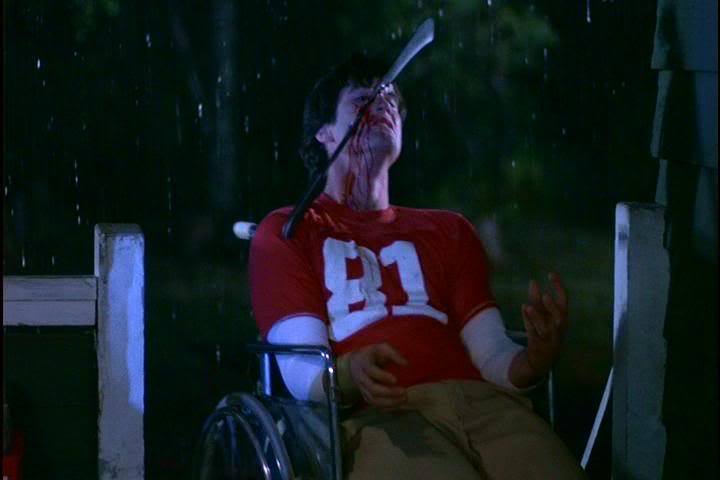
DF: I have a favorite kill from every film, but I think the grand prize has to go to the sleeping bag in
Part 7. Simple, effective and brilliantly conceived – and executed – by Jason.
TH: It's a tie for me: The sleeping bag death in
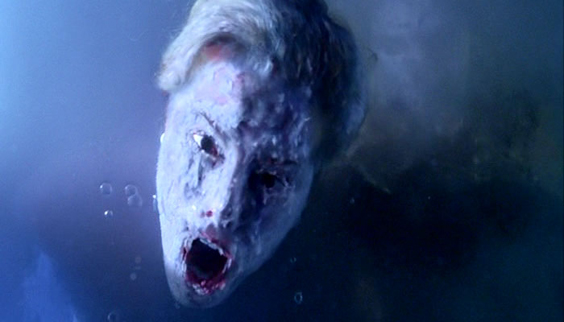
Part 7 is raw and brutal, but almost makes you laugh because you cannot believe it just happened. It's also a happenstance moment that occurred in editing the film down; one hit was so much more powerful than repeated whacks against that tree. The other is the liquid nitrogen face smash in
Jason X. Who saw that one coming!? It was shocking and, no pun intended, very, very cool. We certainly never imagined that happening in science class.
HH: Any plans to document other horror film franchises?
DF: I have had a great time working on these shows and I'm eternally grateful for the opportunity to sit down with and even befriend so many of my childhood heroes. Ending this cycle with
Crystal Lake Memories is like coming home in many ways (and being a bit of a homebody I think I'd like to hang out here for a while). I hope that as all these franchises continue, future generations of filmmakers who were as inspired by these films as we were will pick up the torch and continue the journey where we left off. Then again, I probably shouldn't rule out anything. I don't want to be another one of those guys who calls something "The Final Chapter" when everyone already knows there will be another sequel.
TH: I have decided that each time I complete one of these, I can't imagine gearing up for another, but after
Never Sleep Again came
Inside Story: Scream. After that came
More Brains! A Return to the Living Dead. Now this. As far as documentaries, I can't say what's next. In the meantime, I am hard at work on the feature film
Animal, which I am producing and that I co-wrote with my partner Catherine Trillo. It's executive produced by Drew Barrymore for Chiller Films and stars Keke Palmer, Joey Lauren Adams, Thorsten Kaye, Elizabeth Gillies, Amaury Nolasco, Jeremy Sumpter, Paul Iacono, Parker Young and Eve. It's a really fun, scary piece that is a blast to be part of. I also want to focus on writing, developing and producing more projects with my company, Hutson Ranch Media. As far as more horror documentaries, I think I'll have to simply say: never say never! I’m really lucky to have had the opportunity to explore so many of the films I grew up watching. Meeting the cast and crew of the movies I loved has been an incredibly rewarding and memorable experience.
Crystal Lake Memories: The Complete History of Friday the 13th is now available for pre-order at
CrystalLakeMemories.net